
Define what needs to be developed
We clarify the intended customer, product characteristics, ingredients, available equipment and route to market. The task might concern formulation, processing steps, consistency, packaging or storage. We agree criteria for comparing trial results, so progress can be assessed against the original brief.
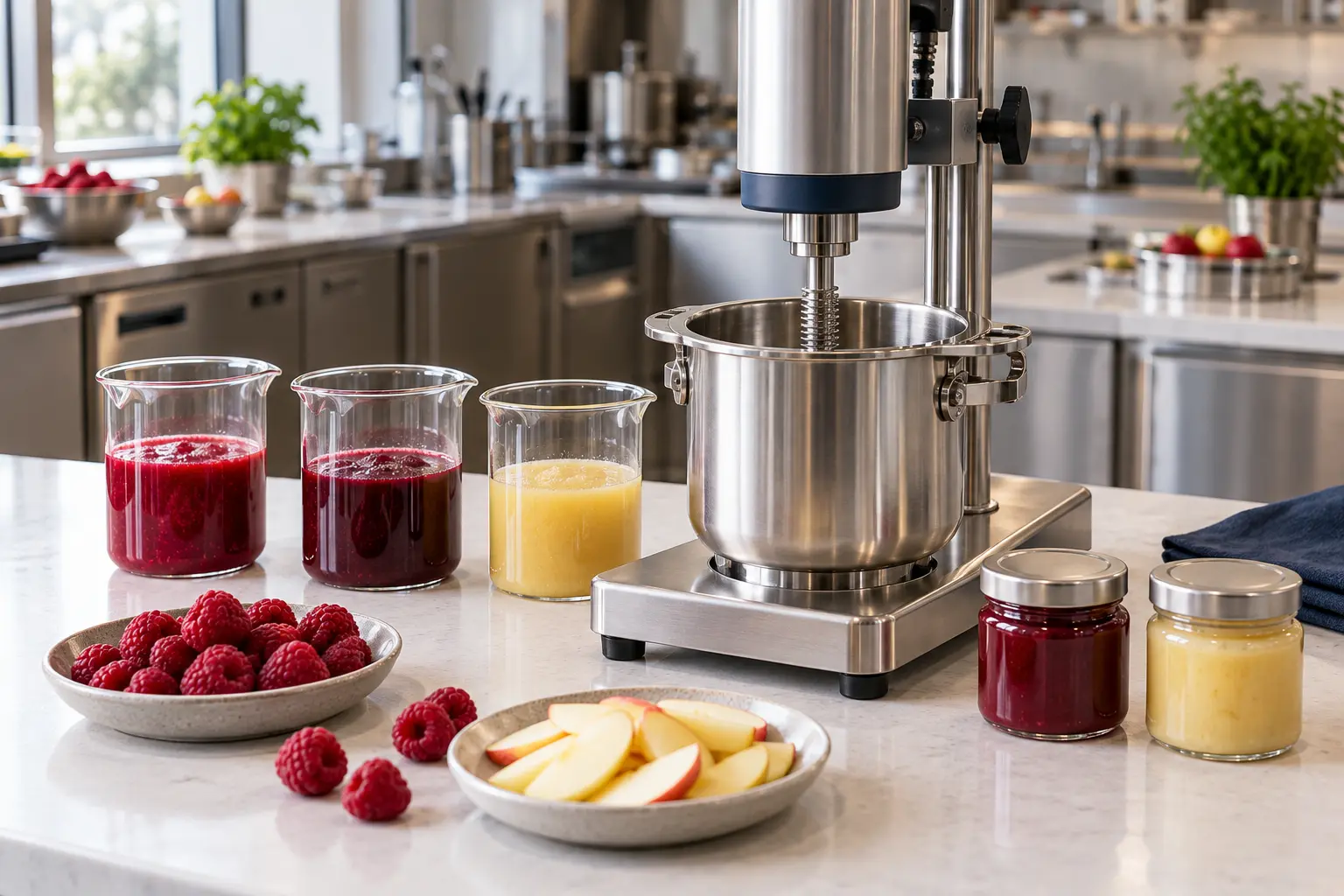
Plan trials and evidence
We examine ingredient properties, process limitations and food safety risks. I help plan pilot batches and relevant measurements. Where needed, we define work for an external laboratory or research organisation. Shelf life and label claims require appropriate substantiation, rather than relying on expectations alone.
Prepare for production transfer
We assess what changes with batch size: mixing, heating, cooling, drying, dosing or packaging. Agreed solutions become usable process parameters and specifications. We distinguish findings already supported by trials from questions that require further checks on your production line before implementation.
What your company receives
A technical brief for developing or changing a product.
A plan for trial batches, evaluation and required research.
Agreed process parameters and tasks for production scale-up.
Pricing and project scope
Individual proposal
Pricing follows development stages, product numbers and trials. Ingredients, testing and external providers are specified separately.
Can you help improve a product already on sale?
Yes. We first define the problem and available evidence, such as inconsistent quality, changed ingredients, new packaging or equipment. We then agree how to test possible solutions.
Are laboratory tests included in the fee?
Not automatically. Test parameters, providers, sample numbers and budgets are agreed separately. A scientific approach means testing hypotheses, not promising a predetermined result.